Supporting Guide

Location-Specific Hiring Feasibility

Talent fit is only one side of hiring success. Teams also need a realistic view of where qualified candidates are located, how quickly they can onboard, and what operational constraints may affect offer closure.

This guide explains how location analytics and origin diversity signals improve planning decisions when applicant volume is high and hiring timelines are tight.

City Density Signal

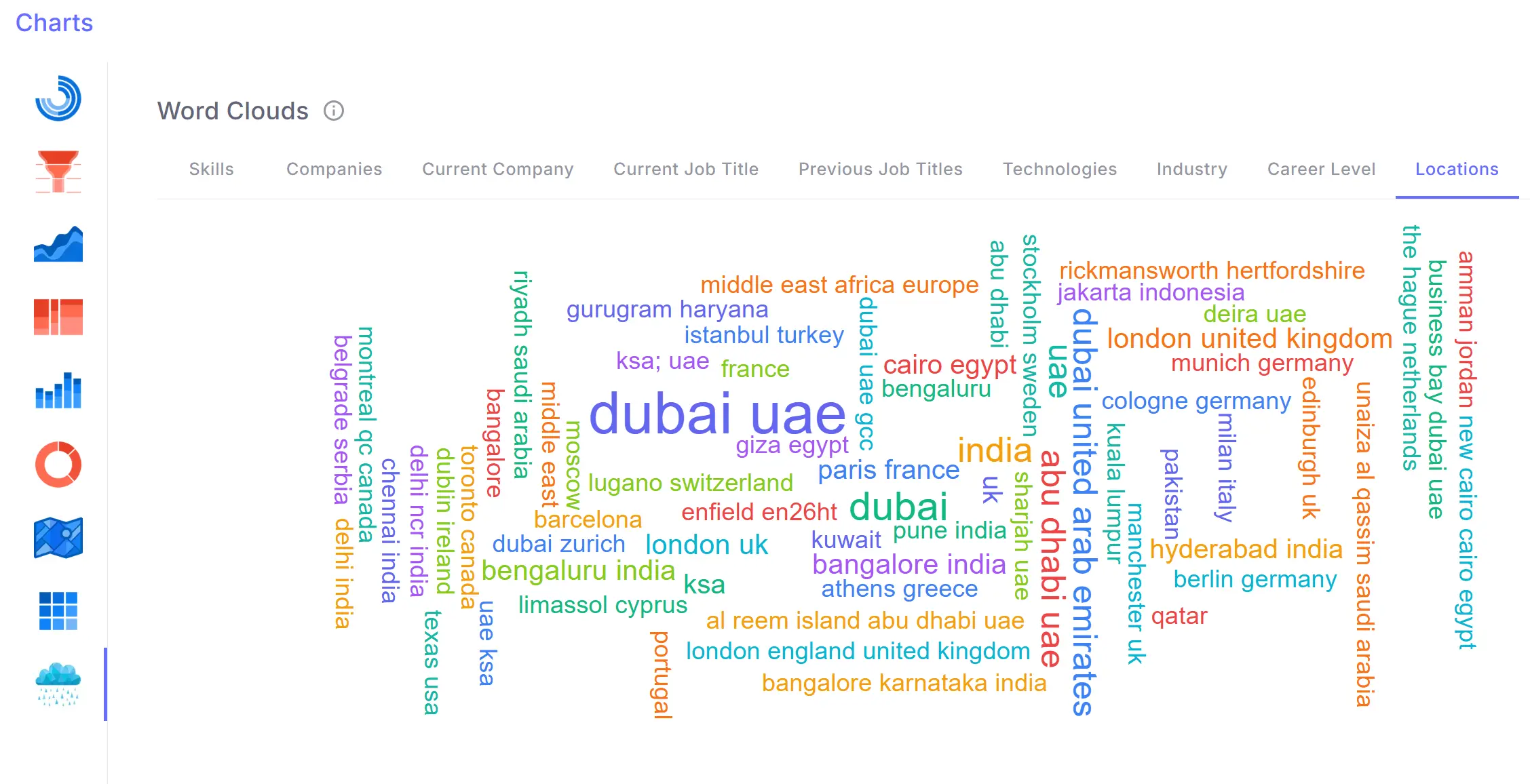
Recruiters need clear visibility into candidate concentration by target city.

The image below helps teams understand how many relevant candidates exist across priority locations. This is critical for realistic time-to-hire planning and early risk detection.

When target talent is concentrated outside your selected city, role design or sourcing strategy may need adjustment before search cycles become slow and expensive.

Location distribution view showing candidate concentration across key cities
City-level distribution data helps estimate feasibility before committing to hiring timelines.

Mobility and Onboarding Impact

Relocation, commute burden, and onboarding cost can materially affect hiring outcomes.

If shortlisted candidates are in another country, visa processing, relocation time, and onboarding spend can extend delivery timelines significantly.

Even within the same country, city-to-city travel demands can affect candidate acceptance, early retention, and role effectiveness. Capturing these signals early supports better offer strategy and clearer stakeholder expectations.

Passport and Origin Diversity Signal

Team composition constraints should be visible as planning data, not scoring bias.

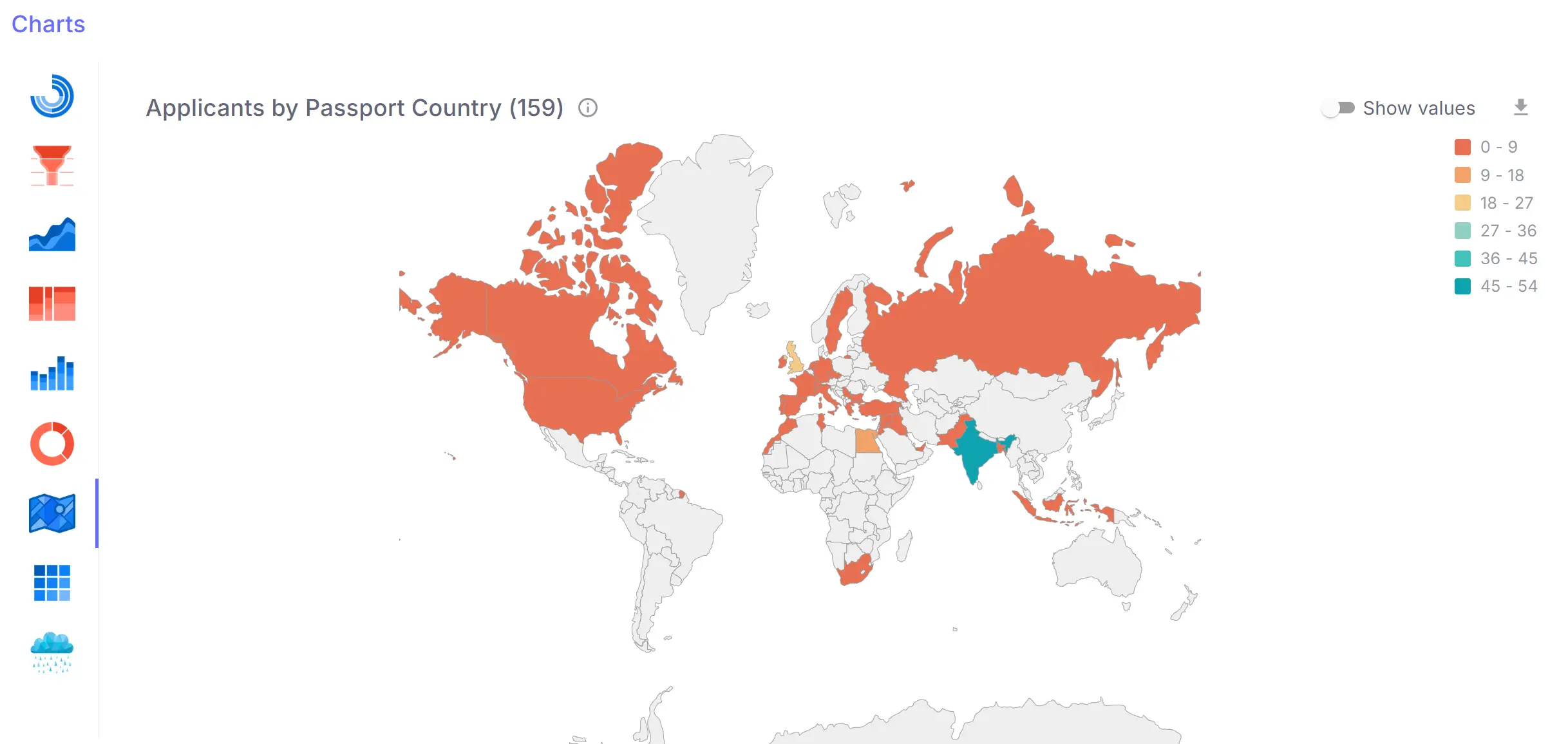
The passport-map view helps leadership and recruiters assess origin diversity across the current and projected team. In some cases, visa limits by country can impact hiring feasibility. In others, teams may need to avoid over-representation from one origin group.

These are operational constraints and should not alter core capability scoring. Candidate quality checkpoints still come from Role-Fit Clarity, and scoring must remain aligned with the bias controls described in Bias-Free Evaluation and Scoring.

Passport and origin diversity map for workforce planning during hiring
Origin diversity analytics helps hiring teams account for visa and representation constraints.

AI and Analytics in High-Volume Hiring

Data analytics is essential, but recruiter usability determines whether insights are applied.

High application volume creates complexity that manual workflows cannot reliably manage. Location and origin signals are powerful only when they are easy for recruiters and hiring managers to read and act on in real time.

AI-assisted workflows can surface these feasibility signals quickly, reduce planning blind spots, and help teams make earlier, evidence-led adjustments instead of reacting late.

Hiring managers can then use ARIC on byteSpark.ai to probe relocation readiness, commute risk, and commitment signals before interviews, so recruiters and managers align on the same feasibility narrative. Continue with Hiring Manager Interview Focus and Validation.

Key questions before finalizing hiring plan

  • How many qualified candidates are realistically available in the target city?
  • What timeline and cost impact appears if talent is mostly outside the country?
  • Does current team composition create visa, workforce planning, or representation constraints?
  • Should role design be adjusted now to prevent low-probability search cycles?

Operating Checklist

Use this to evaluate location feasibility before hiring delays build up.

  • Map candidate concentration by target city before finalizing timeline commitments.
  • Include relocation lead-time and onboarding cost assumptions in feasibility reviews.
  • Flag city-to-city commute risk when role attendance requirements are strict.
  • Review visa and origin-mix constraints as operational factors, not quality proxies.
  • Keep candidate scoring anchored to role criteria, then use location analytics for planning decisions.

Continue building a stronger decision architecture.

Review related guides to strengthen role definition, scoring consistency, and shortlist quality.