The rise of Generative AI is creating a critical inflection point for enterprise transformation. At the center of this shift are Artificial Intelligence Specialists, professionals who blend deep technical knowledge with strategic business insight. Unlike traditional engineers or data scientists, AI Specialists are uniquely positioned to drive end-to-end AI adoption: from identifying value-driven use cases to leading implementation across complex enterprise environments.
At byteSpark.ai, we recently analyzed hundreds of candidate profiles for a flagship AI Specialist role in the UAE. Based on skill word clouds, heatmap forecasts, and hiring manager insights, we’ve uncovered how this role is evolving and what that means for the future of enterprise innovation.
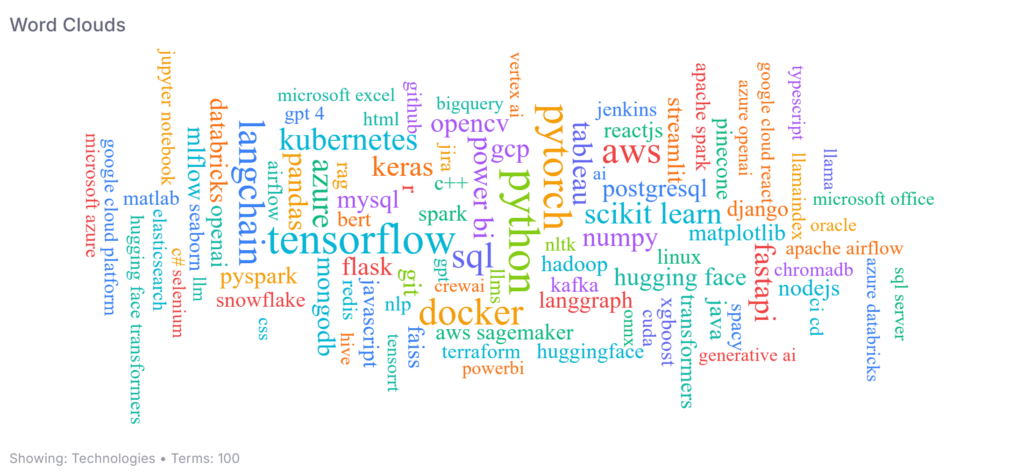
The accompanying technology word cloud highlights the most in-demand tools and platforms among candidates applying for AI Specialist roles. Core programming languages like Python, SQL, and JavaScript dominate the landscape, alongside key frameworks such as TensorFlow, PyTorch, scikit-learn, and LangChain. Cloud infrastructure expertise (e.g., AWS, GCP, Azure) remains essential, while tools like Docker, Kubernetes, Hugging Face, and MLflow signal strong demand for scalable, production-grade AI solutions. This blend of MLOps, deep learning, and LLM tooling reflects the evolving full-stack nature of modern AI engineering roles.
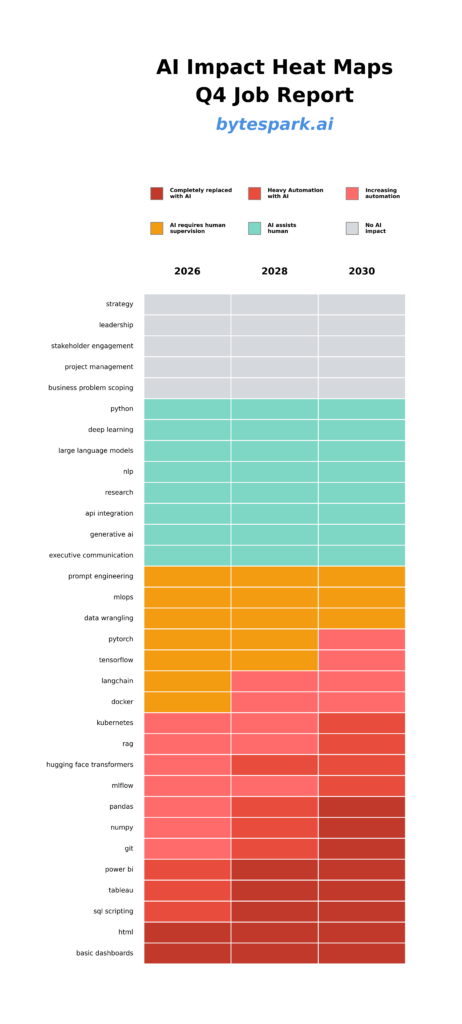
📊 Heatmap: AI’s Impact on AI Specialist Skills (2026–2030)
Legend:
🟥 Completely Replaced with AI
🟥 Heavy Automation
🟥 Increasing Automation
🟧 AI Requires Human Supervision
🟩 AI Assists Human
⬜ No AI Impact
Our heatmap analysis reveals that:
- Execution-heavy and tooling-specific skills (e.g., Tableau, Git, HTML) are increasingly automated.
- Leadership, architecture, and problem-scoping capabilities (e.g., Project Management, Strategy) remain resilient and even grow in value.
- Skills involving generative AI application, orchestration, and prompt engineering are becoming core differentiators.
🔍 Deep Dive: AI’s Dual Impact on AI Professionals
🛠️ Execution & Engineering Tasks Are at High Risk
Skills like data visualization, SQL, and even parts of model deployment (e.g., MLOps, GitOps) are increasingly handled by autoML tools, low-code interfaces, and AI agents. The AI Specialist of the future will orchestrate rather than code every detail.
“We’re seeing a decline in manual tasks like model tuning or dashboard creation. Tools like LangChain, Hugging Face Transformers, and Vertex AI are accelerating abstraction.” — Hiring Manager, byteSpark.ai Client (UAE)
🧠 Strategy, Judgment & Business Translation Gain Prominence
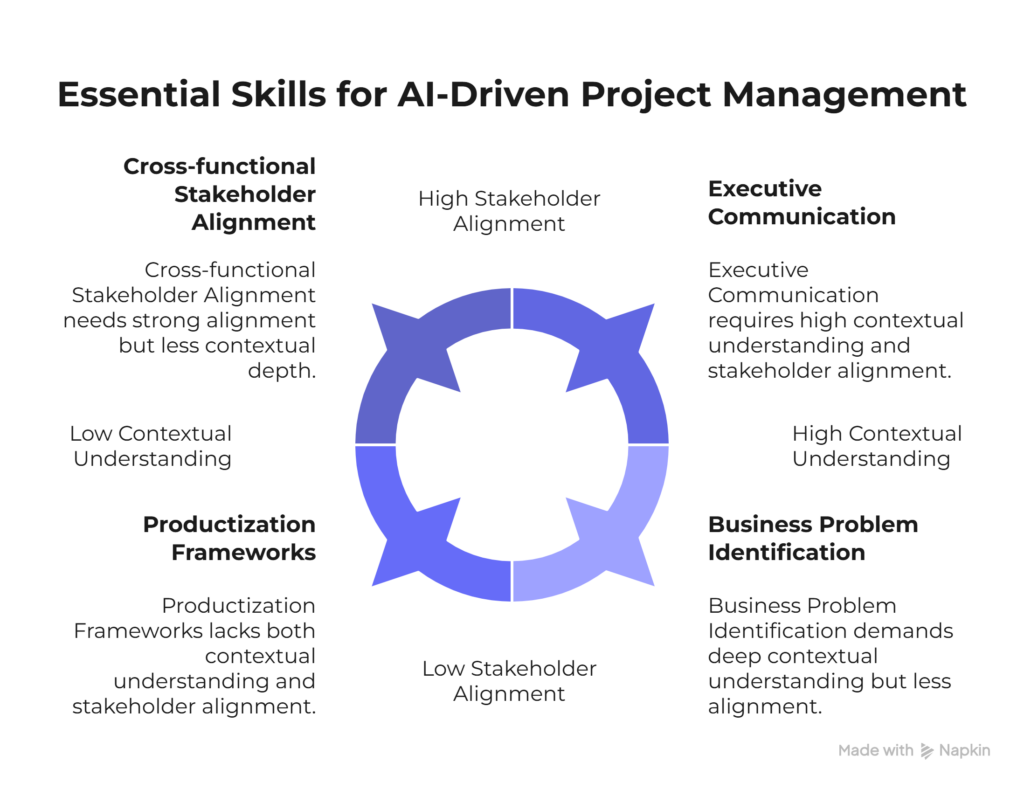
Skills that require understanding context, aligning stakeholders, and bridging AI to value delivery remain critical. This includes:
- Business problem identification
- Executive communication
- Cross-functional stakeholder alignment
- Productization frameworks
🧠 Top AI Tools & Frameworks from Candidate Profiles
Based on the word cloud data from active candidates for this role, the top AI tools mentioned include:
| Category | Common Mentions |
|---|---|
| Programming | Python, SQL, PyTorch, TensorFlow, Java |
| Orchestration & MLOps | LangChain, Docker, Kubernetes, MLflow |
| Generative AI | Prompt Engineering, LLMs, RAG, Transformers |
| Visualization & Data | Tableau, Pandas, NumPy, Power BI |
| Infra & Cloud | GCP, AWS, Azure |
These tools aren’t just nice-to-haves—they define what makes an AI Specialist “deployment ready.”
See below for our proprietary byteSpark.ai Talent Quadrant – AI & GenAI Roles:
Immediate Business Impact (vertical) vs. Future-Oriented / Digital Potential (horizontal).
Read bottom→top and left→right. Upper-right represents the most future-proof hires.
Circle size indicates relative talent availability in the market.
Prioritize the upper-right for hiring.
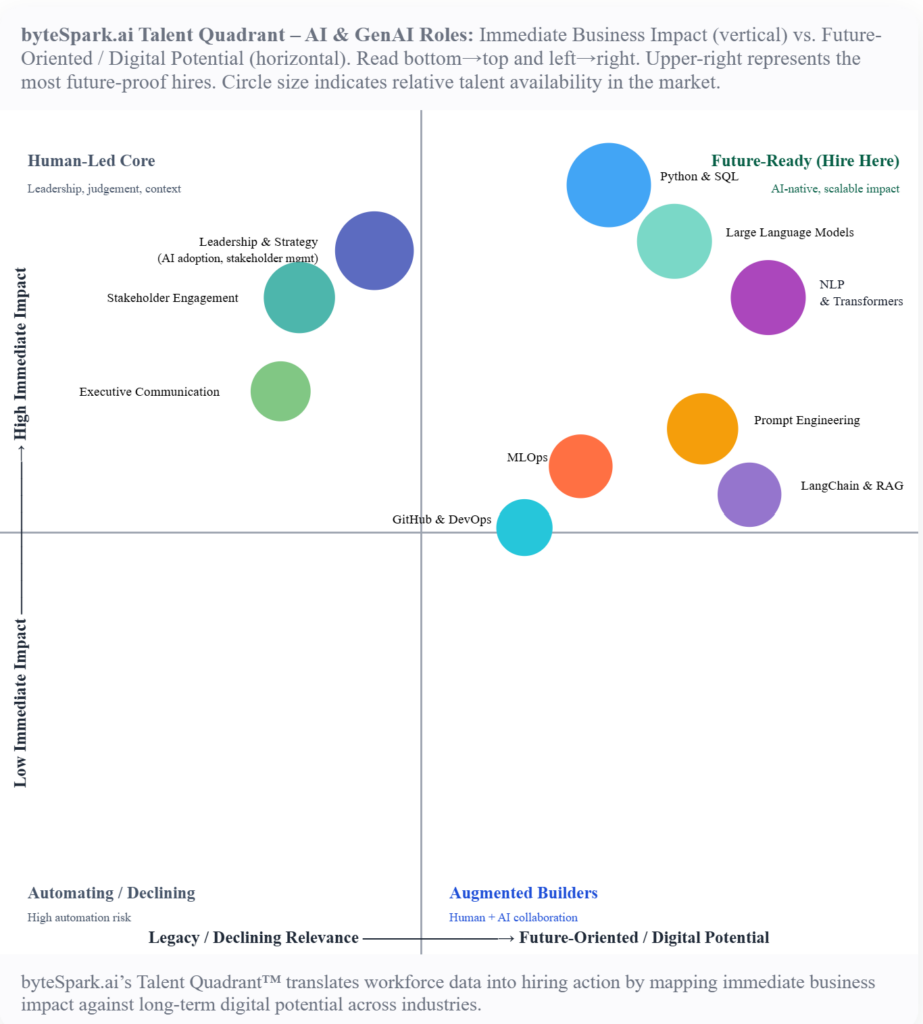
byteSpark.ai’s Talent Quadrant™ translates workforce data into hiring action by mapping immediate business impact against long-term digital potential across industries.
Upper-right quadrant highlights the future-ready hiring pool.
Use this as a hiring roadmap for your business.
🧠 Summary Table: Forecast Impact of AI on Core Skills
| AI Impact Category | % of Skills | Examples |
|---|---|---|
| ✅ Completely Replaced | 18% | SQL scripting, basic dashboards, HTML |
| 🟧 Needs Supervision | 32% | Data wrangling, prompt engineering, MLOps |
| 💡 AI Assists Human | 34% | Deep learning, API integration, NLP |
| 🚫 No AI Impact | 16% | Strategy, stakeholder engagement, scoping |
Most at-risk skills are executional, linear, or tooling-focused.
Most resilient skills require contextual intelligence, stakeholder fluency, and design thinking.
📣 Final Thought: AI Won’t Replace AI Specialists—But It Will Redefine Them
The AI Specialist of the future won’t be defined by how well they can train a model but by how effectively they translate messy enterprise problems into scalable AI systems.
At byteSpark.ai, we believe that the best AI Specialists are not just engineers, they’re business translators, architects, and trusted advisors.
✍️ Powered by byteSpark.ai
This analysis is based on live data across our talent pool, mapped via our AI Job Intelligence Engine called CESAR (Contextual Evaluation Scoring & Ranking). Want to see where your team stands? Full methodology and data available upon request.