How to compete and get ahead
byteSpark.ai has been delivering recruitment services since 2022. The recruitment service provider world is surely overcorwded. There are a number of interesting myths of the recruitment world which have been discussed. They are called myths because we heard of them but didn’t really get to see them. This could be because of the advanced AI capabilities byteSpark.ai is using to evaluate and shortlist candidates.
The myths we share are divided into two groups; myths related to ATS platforms and myths related to the competence recruiters build over time with experience.
Myths related to ATS Platforms
Myth #1 – ATS Platforms help surface the best candidates
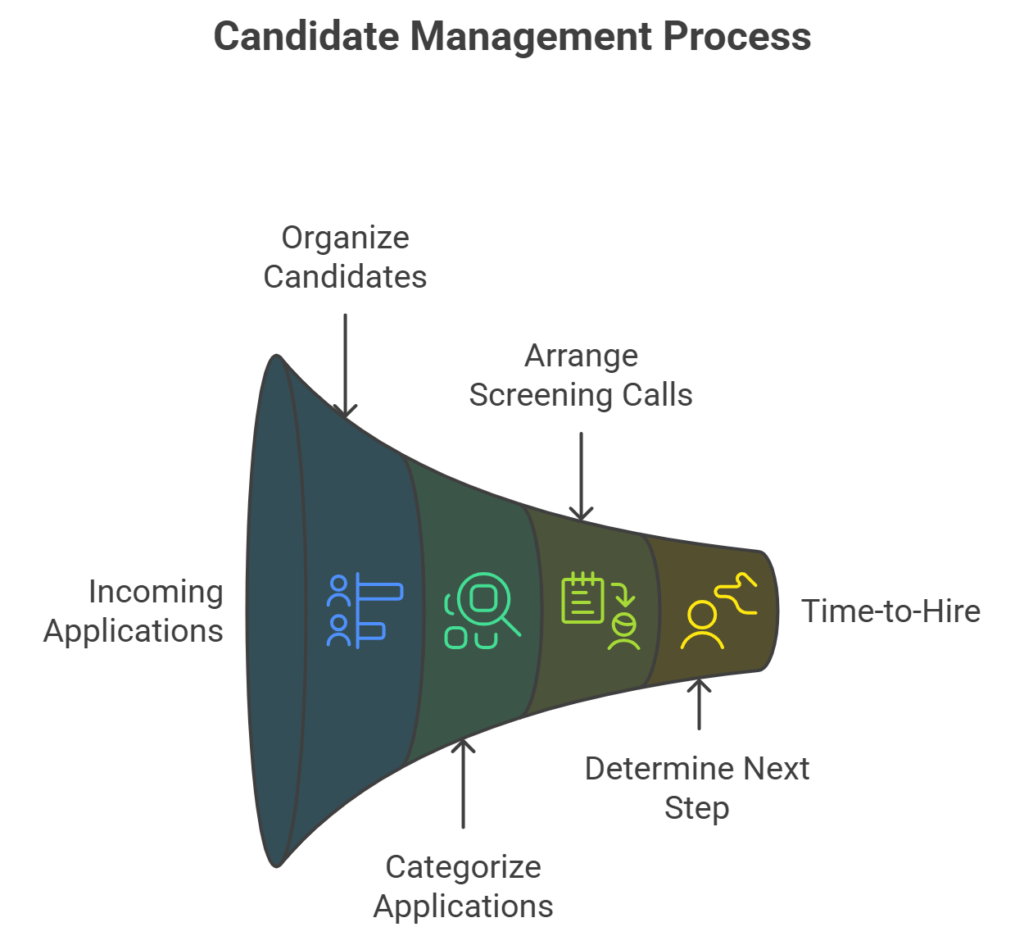
Recruiters we have been speaking to tell us that an ATS, as of 2026, allows them to organise candidates at best. It allows them to categorize incoming applications for shortlisting and arrange screening calls with the candidates that seem to fit. After a screening call they are able to determine the next step for the candidate – shortlist or ignore. The change in status for candidates, along with a timestamp, allows them to determine the time-to-hire. Getting the best candidate from an ATS is hardly a claim the recruitment faternity has stood behind.
Myth #2 – ATS Platforms allow us to find candidates for new roles
A strong candidate pool is like a gold mine for any recruiter. Having the CV of a candidate who has willingly shared it with a recruiter with the hope to land a new role, means that if something comes up, you save a lot of time in searching for candidates or waiting for the right candidate to apply. If your candidate pool is warm and active and keen to accept an new opportunity, it is the best position to be in. A recruiter can call them, discuss the role and shortlist them for the hiring manager.
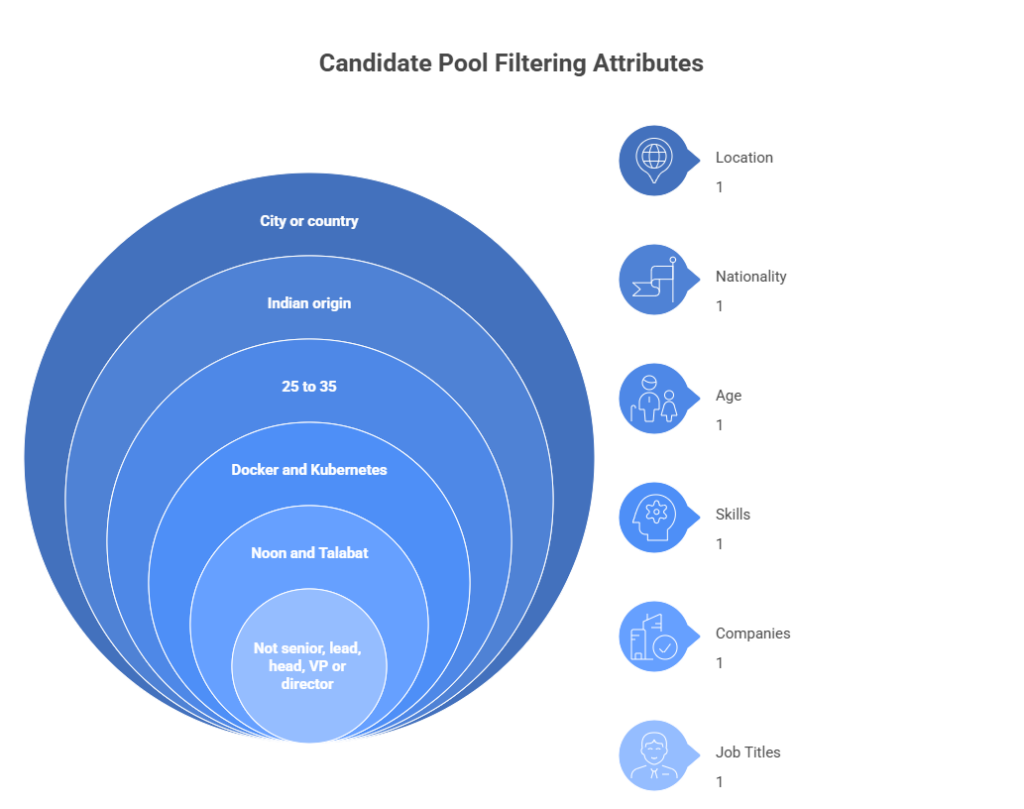
Our discussions with recruitment leads since 2022 has yielded one common baseline. Their ability to find a candidate is restricted to filtering based on a very limited number of attributes. The best list we have come across allows a recruiter to find candidates based on the following:
- Location (city or country)
- Nationality
- Age
- Skills keywords
- Companies worked for
- Job Titles
Most of the platforms allow recruiters to filter on one attribute at a time. Some allow recruiters to use advanced boolean expressions using AND and OR operators. As an example if: “I am looking for a candidate based in Dubai, of Indian origin, aged between 25 and 35, having skills in Docker and Kubernetes and having worked for companies like Noon and Talabat, with a previous job title not including senior, lead, head, VP or director”, will require a complex boolean expression to be built. Building this expression with just 6 attributes looks painful. Now, imagine a platform like that of byteSpark.ai that allows more than 20 attributes to be combined. Building the boolean expression will take time. Having the capability to search the database with a simple narrative statement, starting with “I am looking for …”, makes life easier and surfaces candidates quicker.
Myth #3 – ATS Platforms enable hiring managers to see the best talent
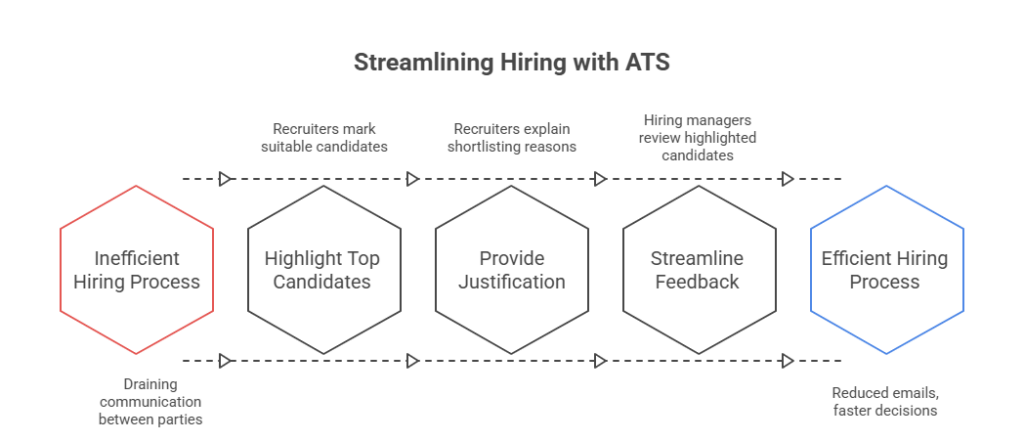
If only the amount of emails between recruiters and hiring manager could be reduced to zero. It would improve the efficiency significantly. A hiring manager could simply login and see the candidates that the recruiter has highlighted and see the justification for why a candidate has been shortlisted. But this is hardly the case. The iterative process between the two parties is draining according to the recruiters. Finding time with the hiring manager is not easy as they are busy working on multiple issues in their department or team. So getting them on a call to discuss a shortlist or getting feddback from them is not easy.
Collaborative tools which allow recruiters to participate on one or more roles exists in current ATS systems. But an ATS system like that of byteSpark.ai that allows seamless collaboration between a hiring manager and recruiter hardly exists. The byteSpark.ai approach allows a recruiter to simply click on an icon which informs the hiring manager that there is a candidate waiting and all the information from the recruiter is readily available for the hiring manager can progress with a decision without needing to find a common time with the recruiter or send long emails which may be missed.
Myths related to Recruiter Skills
Myth #4 – Recruiters can scan a CV in 5 to 10 seconds
This is an interesting claim we have heard many times. But the reality is that recruiters are human beings and their ability to evaluate candidates in 5 to 10 seconds can be done, but not objectively. A short duration of 5 to 10 seconds allows them to scan for the look and feel of the CV, look for the few keywords they were able to remember from the hiring manager briefing. Recruiters feel confident about this claim and to some extent this is possible if the requirement is to look for one or two signals in the CV of a candidate. The most common we have heard of, unfortunately, are related to the human bias of the hiring manager – e.g. the nationality and the companies the person has worked for or the institutions they studied at.
Serious recruiters who take the evaluation of a candidate seriously take a minimum of 5 minutes and a maximum of 10 minutes. This is on a completely different scale and respectful to the time and effort the candidate put in at the time of applying.
Myth #5 – Recruiters do not read more than 2 pages
Well, this one is not a myth. A lot of recruiters we have spoken to agree with this. If they do not find the most relevant information about the role they are hiring for in the first two pages, it goes in the bin. No questions asked. It is like a unspoken rule in the world of recruitment. It tells them that the candidate has not taken the time to tailor their CV to the role and have simply submitted their generic CV which they are using for every role.